
Postcards from Paris, No. 5: On the Lookout for Joan of Arc While Plumbing the Depths of the Sacred Heart
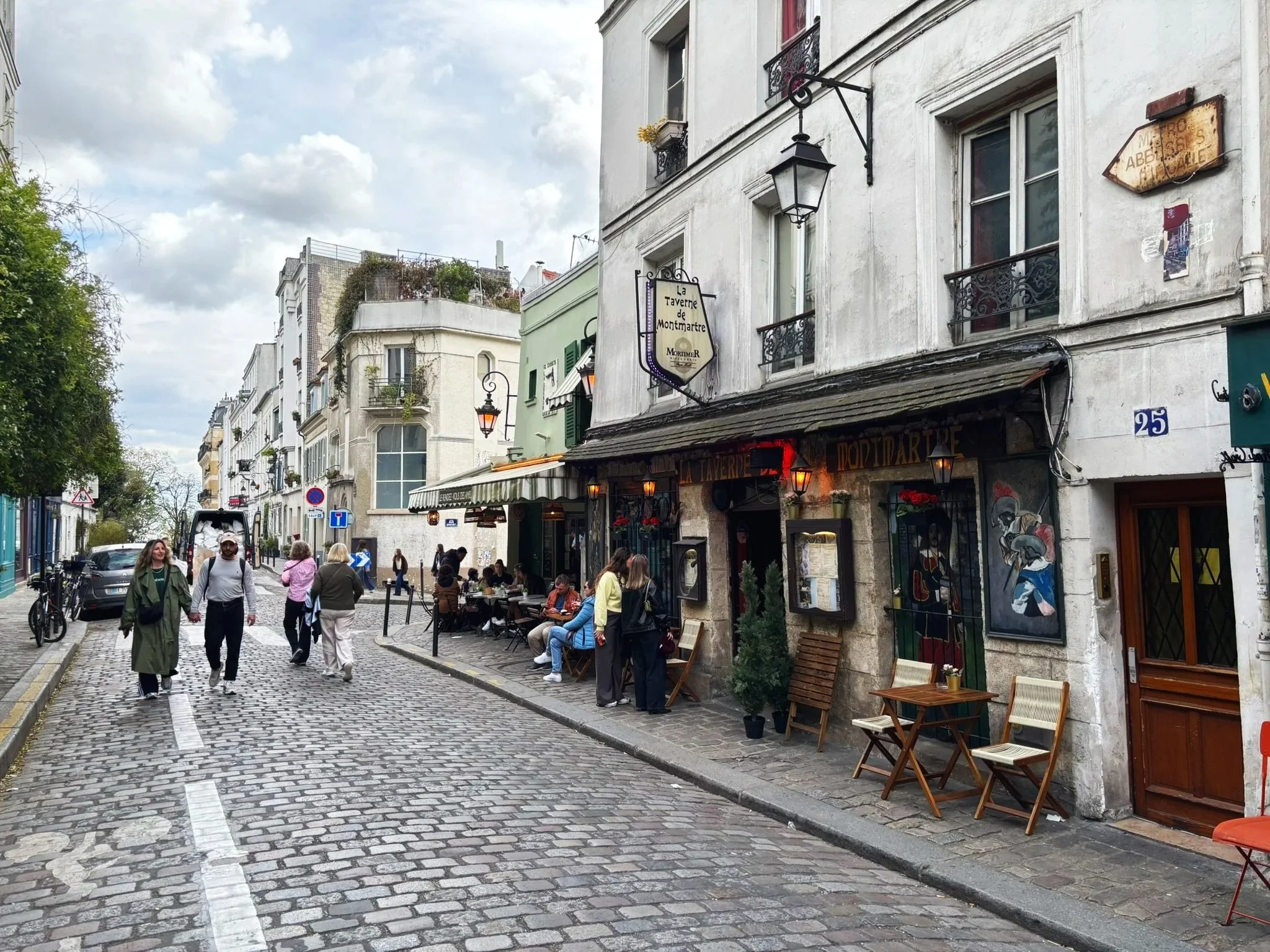
La Taverne de Montmartre sits just down the way from the Basilica of the Sacred Heart of Jesus in Paris
Monday, 12:39pm — Paris stretches out before us as we stand atop the terrace of Gallery Lafayette. We peer down at the peasants walking the streets below and laugh heartily whilst thinking on our good fortune.
Our fifth full day in grand ole Paris was the only one we’d left wide open. No timed museum tickets. No Seine River cruises. No Eiffel Tower tours. No four-hour bus rides into the French countryside. Instead, we got to sleep in a bit and then had a solid 12 hours to fill however we saw fit.
For whatever reason, we began the day with a return trip to one of the first places we’d visited all the way back on Day 1: the multi-story shopping mall Galeries Lafayette Haussmann, which, you may remember, was located a mere five-minute walk or so from our home base at Hôtel Chavanel in Paris’ 8th Arrondissement.
Neither of us had any illusions that we’d be swapping out our American threads for an entirely new French wardrobe — it was infinitely likelier that we would walk out empty-handed, in fact — but it can still be fun to look around and do a little window shopping. That’s especially true when the shopping mall in question is as fine a specimen as Galeries Lafayette, a 70,000-square-meter behemoth that opened all the way back in 1912. Even if you don’t give a rat’s patoot about the 3,500+ brands on offer, you can still enjoy the magnificent Art Nouveau glass dome ceiling overhead and the rooftop terrace up top offering panoramic views of the city. There are also several restaurants inside, should you require some fuel while other members of your party wear out their credit cards.
But enough about that. Let’s hear about you. How’s your day going? Are you drinking enough water? Have you had anything to eat? Are you reading this while you’re supposed to be doing something else, like work? That’s all right, everybody needs a little break now and then. Do you feel seen now? Good, good.
I don’t know where I was going with that, but what I can tell you is that after stopping by Galeries Lafayette (and leaving with no less cash money in our wallets than when we entered, as foretold) it was time to unlock a new section of the map.
2:01pm — A jolly fellow armed with a guitar sings “Somewhere Over the Rainbow” on the steps of the Basilica of the Sacred Heart at Montmartre. Judging by the number of coins in his basket, he’s doing just fine — although I see some dunderheaded American tipped him in U.S. dollars (don’t look at me).
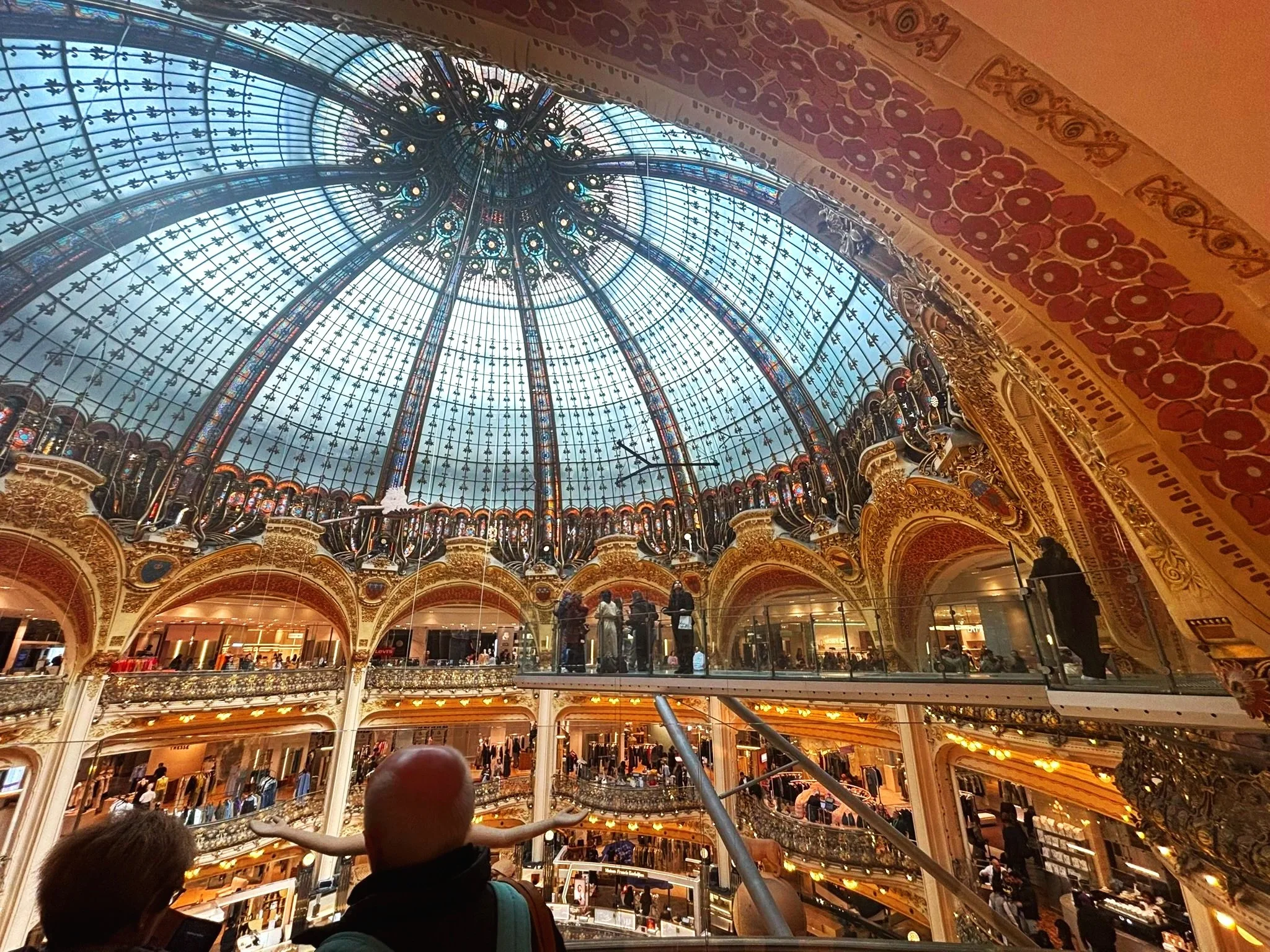
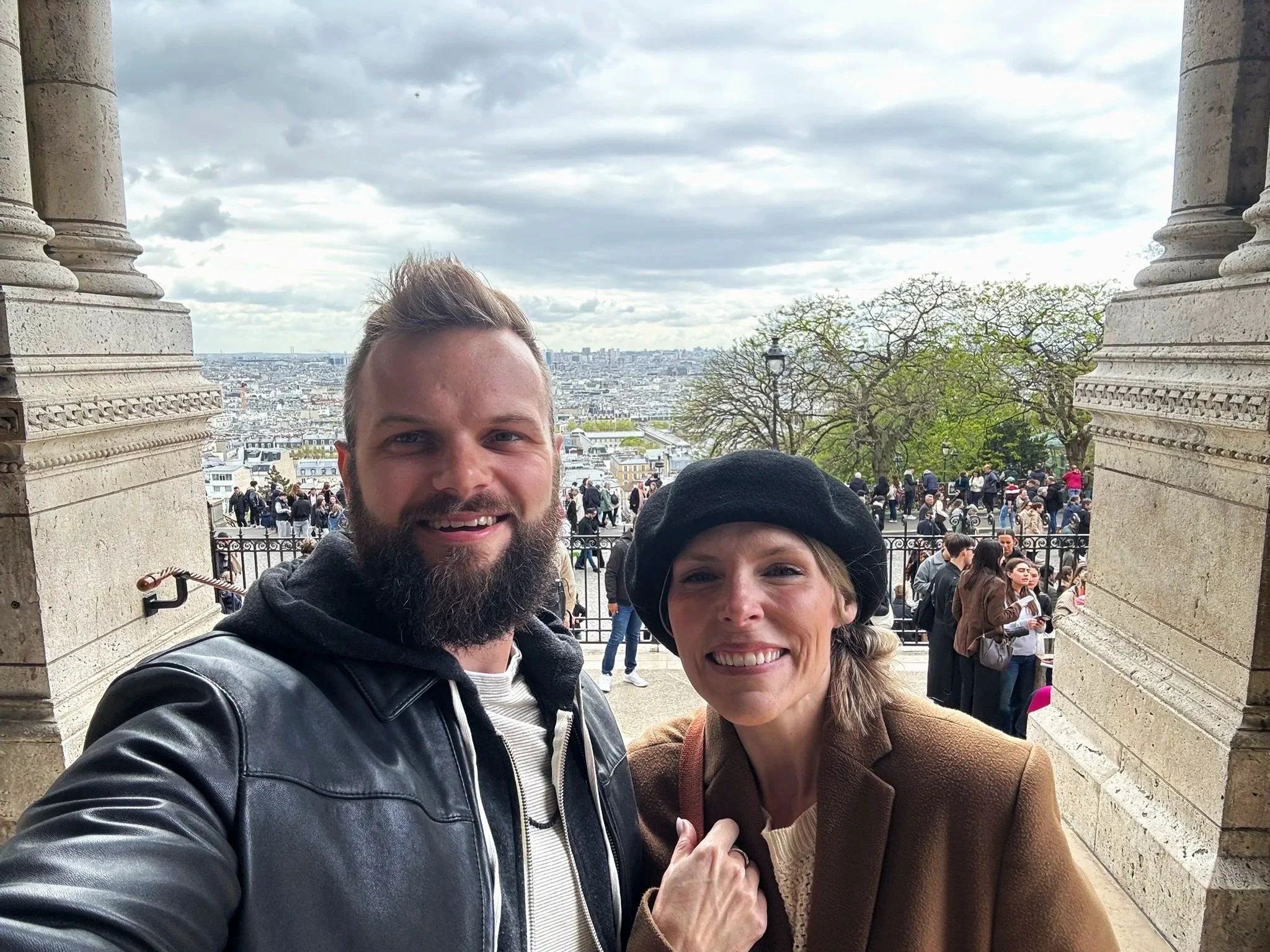
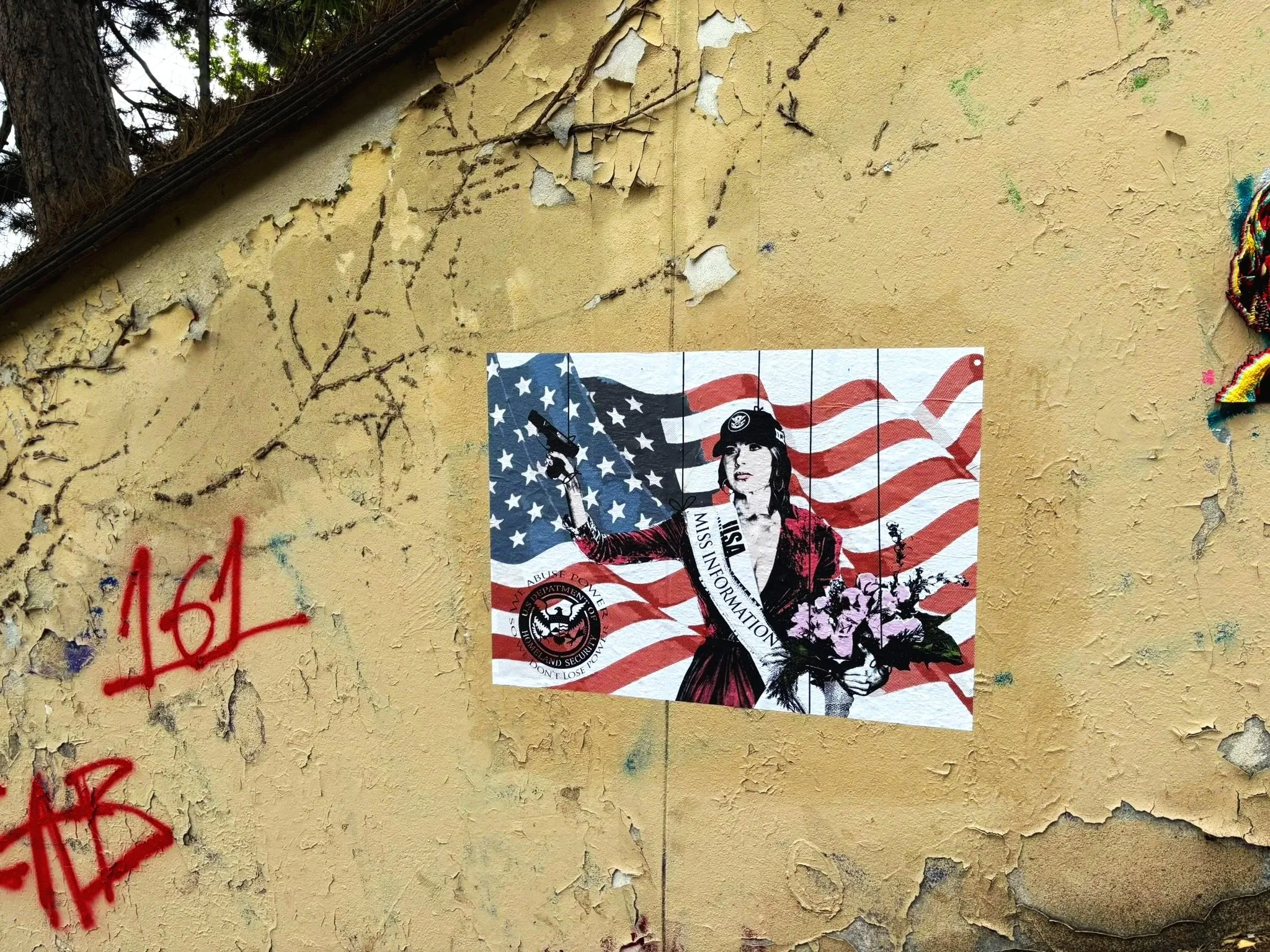
That’s right. As the title of this post(card) hints at, we elected to check out the church that sits atop the highest hill in Paris, as well as the area surrounding it, which is known as Montmartre (“Mountain of the Martyr”). The Basilica of the Sacred Heart is considered a “minor basilica” — whatever that means — but try telling that to all of the people that journey there annually, making it one of the city’s most popular tourist destinations. By some counts, it is second only to the Eiffel Tower, though I’m sure the Louvre and other sites would like a word on that subject.
What is the “Sacred Heart”, you ask? That would be the literal heart of Jesus. Okay, okay, not his actual, physical heart, but that which it symbolizes — namely, God’s unending love for mankind. Honoring the Sacred Heart of Jesus is one of the Catholic devotions, which are a set of customs and practices viewed as supplemental to the fundamental teachings of the church. Other devotions that might be more familiar to the lay person would be things like praying the Rosary or observing/reciting the Stations of the Cross.
So, in case you didn’t know, that’s what they’re up to up there on the highest perch in Paris: praying day and night to this symbol of God’s love. But hey, you don’t have to be religious or spiritual in any way to appreciate the marvel that is the Basilica of the Sacred Heart, nor the stunning view of the city right outside its doors (which is visible behind me and my traveling companion in the middle photo up above). And perhaps the best news of all is that it’s free to check out, no entry fee required.
Architecturally, the basilica is unique in a number of ways when set against the likes of Notre Dame and other houses of worship scattered across the city, not to mention the country. It was not built in the Gothic style as many a church in France, but rather in what’s known (very formally) as “Romanesque-Byzantine Revival”, which the Internets tell me is a combination that draws influence from medieval Western Europe (roughly covering the years 950 to 1150) and the Byzantine Empire. We probably all have some idea of the various trappings of medieval architecture — thick walls, rounded arches, symmetrical designs; castle-like, in other words — but if you’re like me and find yourself scratching your head at this Byzantine business, you need only know that the Hagia Sophia, located in Istanbul, Turkey, is considered the height of Byzantine style.
3:33pm — We sit down for vittles at Breizh Café some ways down the hill. I order an adult beverage akin to a rum punch. As soon as I take the first sip, I’m transported back to a catamaran sailing around the island of Sint Maarten (iykyk (and if you don’t, you can follow that link)).
The interior of the church is something to behold all its own, of course, but rather than throw more architectural lingo at you, let me just mention one noteworthy thing you’ll find inside. That would be the famous “Christ in Majesty” mosaic that adorns the ceiling above the sanctuary (seen below). This 5,100-square-foot work of art, which depicts Jesus with arms outstretched surrounded by various saints, angels, and religious symbols, is one of the largest mosaics in the world. Alongside 8-pound, 6-ounce baby Je… I mean, regular adult Jesus, we also have the Virgin Mary, Saint Michael, Pope Leo XIII (not the dude from Chicago, relax), and the nation of France personified as a woman in white offering up a crown.
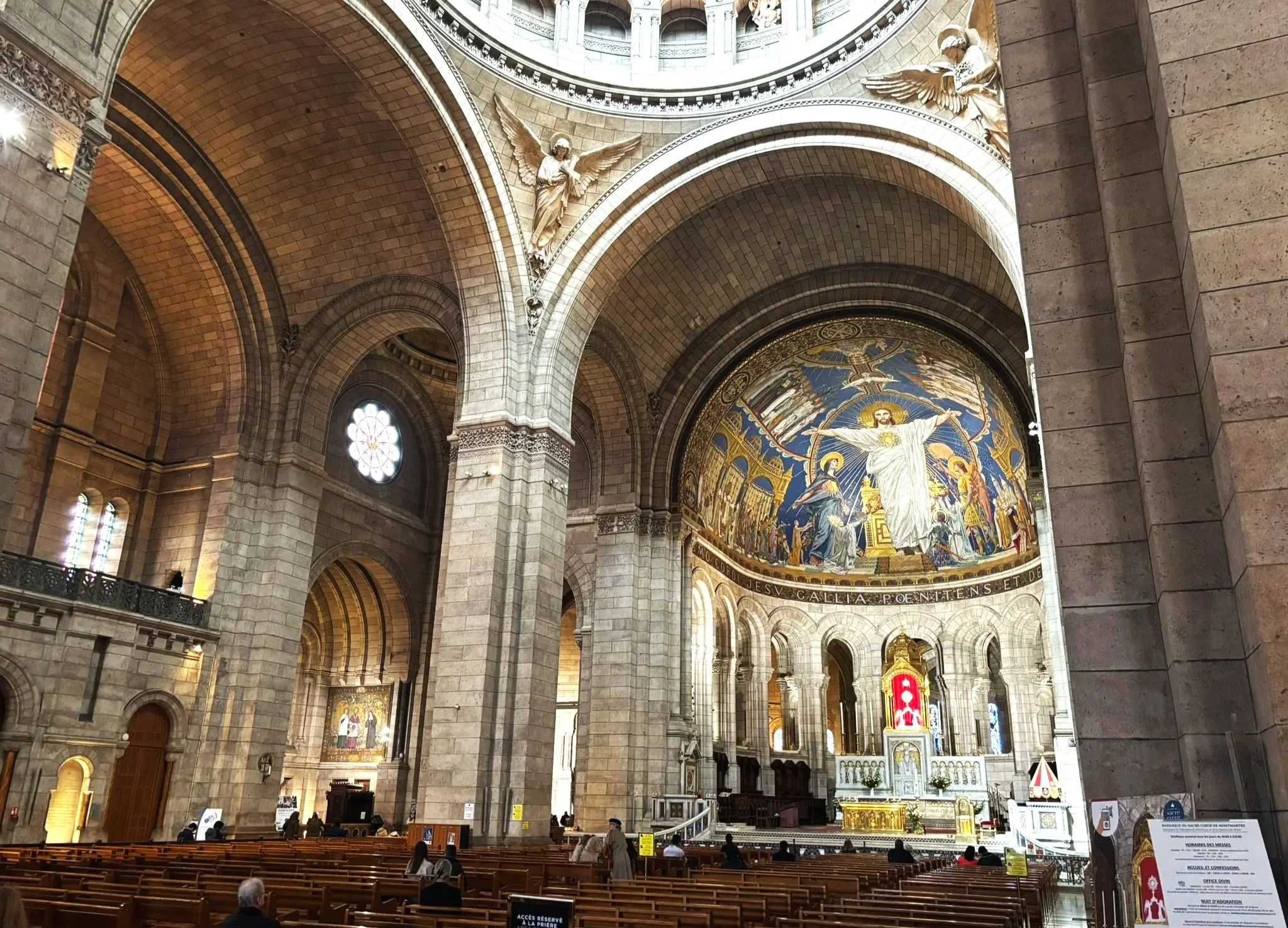
Inside the Basilica of the Sacred Heart of Jesus, where the gigantic “Christ in Majesty” mosaic can be found
In addition to that crew, another one of Jesus’ pals (and I’m using that in the loosest sense possible, of course) featured in the mighty mosaic is none other than our girl Joan of Arc, the famed French teen who became a military leader during the Hundred Years’ War (1337-1453) between France and England. Born a peasant girl in a village called Domrémy-la-Pucelle, which sits about 150 miles east of Paris in northern France, Joan claimed that saints Michael, Margaret, and Catherine implored her to help Charles VII save the nation from English rule.
Her first major coup came during the Siege of Orléans (1428-1429). The French had been attempting to repel the English army for nearly six months when Joan, who was only 16 or 17 years old at the time, arrived with reinforcements in the form of 400-500 additional soldiers and some much-needed supplies. Joan and company provided such relief and inspiration (she was even struck by an arrow at one point but got right back into the fight) that the French were able to break the siege within ten days, sending the English home with their tea and crumpets tucked between their legs (not sure that metaphor works, but we’re going with it). The successful defense of Orléans ended up being a turning point in the seemingly unending conflict, leading to successive French dubs (see: wins) elsewhere.
Later, after another major W in the Battle of Patay, Joan was in the room where it happened, as they say, when Charles VII, who had been sorta-kinda king of a divided France for nearly a decade already, was officially crowned in Reims, the traditional city for French coronations which they had only recently recaptured, in October 1429.
It didn’t take long for Ms. Arc’s luck to run out, however. First, she and the troops bit the dust in back-to-back siege attempts on Paris and La Charité, both of which were occupied by the English and their allies at the time. Undeterred, Joan and the boys kept calm and carried on, attempting some months later to provide relief to the citizens of Compiègne, who were vigorously defending their city against an ongoing assault orchestrated by Duke Philip III of Burgundy.
The Burgundians, an ally of England that controlled large portions of France for a time during the Hundred Years’ War, ultimately captured Joan of Arc outside Compiègne, later turning her over to the English. She was put on trial for a number of crimes, most of them having to do with heresy and blasphemy (they did not care for her “dressing like a boy”, let me tell ya). She was, of course, found guilty, and ultimately burned at the stake at just 19 years old on May 30, 1431.
6:56pm — I finish the last of five postcards I am planning to mail back home to the fam. Because I am a sadist, the messages are all in French (thank you, Google Translate).
For her efforts, Joan of Arc was eventually canonized and is now recognized as a patron saint of France, thus bringing us back around to her inclusion in the massive “Christ in Majesty” mosaic at the Basilica of the Sacred Heart of Jesus. She is such a fan favorite, in fact, she not only appears in the mosaic but is also depicted via a pair of statues elsewhere on the premises. One is a bronze statue located outside near the main entrance that features Saint Joan of Arc mounted on horseback, armored and holding a sword aloft. The other is a smaller stone tribute found inside the church, just to the right of the entrance, depicting Joan kneeling and praying to Saint Michael.
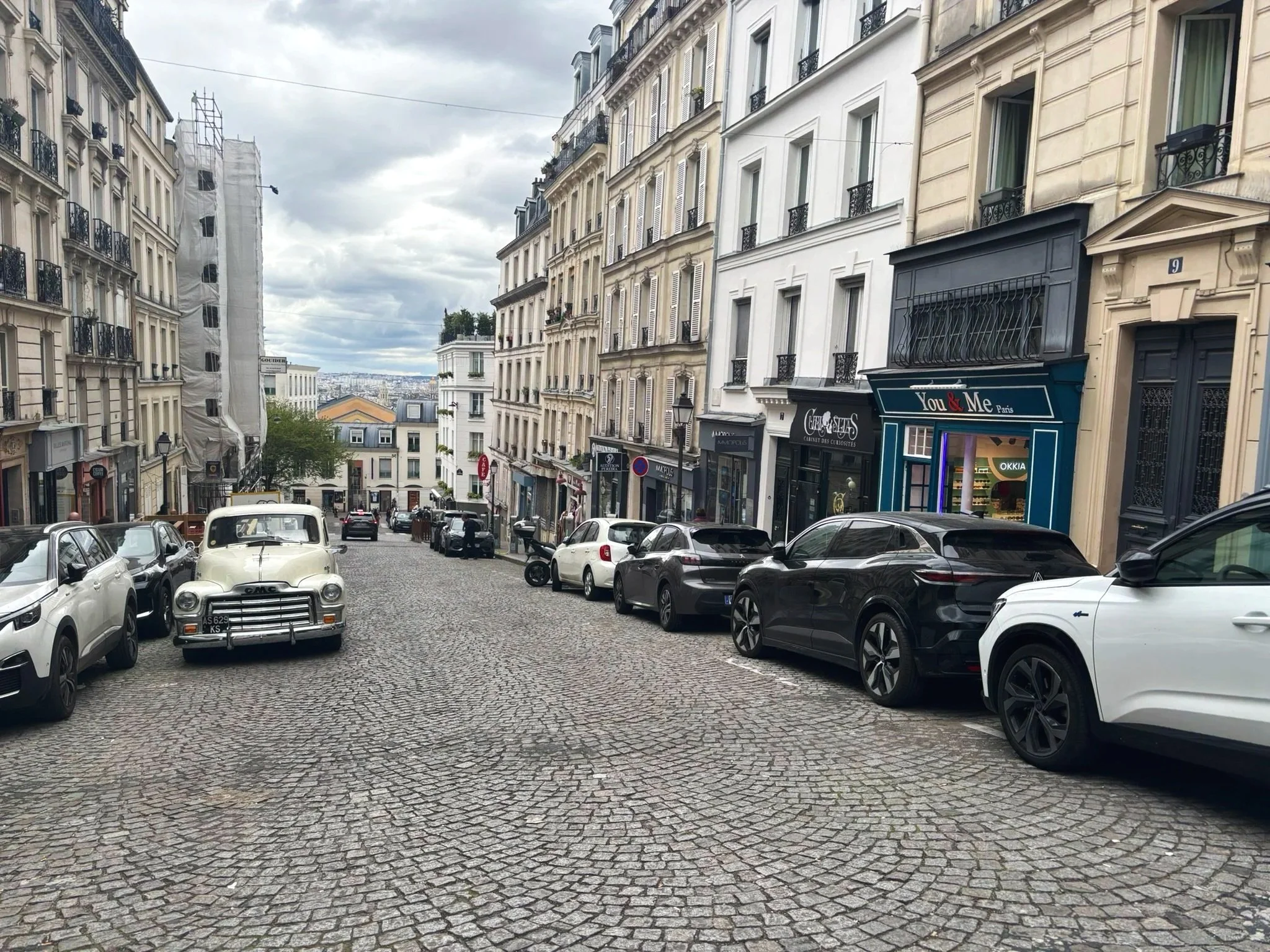
There is more to Montmartre than the basilica, of course, but Joan just took up a lot of our time (deservedly so), so maybe we’ll just throw some fast facts at you. Sound good? Great. Here’s a few useful things to know about Paris’ favorite bohemian hilltop district:
Montmartre, which was originally called mons Martis (“Mount Mars”) in Roman times due to the existence of temples dedicated to the Roman gods Mars and Mercury, earned its status as an artists’ haven in the 19th and 20th centuries because it was a more rural area outside of central Paris that was much more affordable for creative types
The district, which didn’t become part of the city until 1860, is distinct from the rest of Paris in that it is designed more like a village found in the countryside, featuring cobblestone streets, winding alleys, and even a working vineyard (Vignes du Clos Montmartre)
In addition to being the erstwhile home of famous artists such as Pablo Picasso, Vincent van Gogh, and Pierre-Auguste Renoir, Montmartre is the current home of famous entertainment hotspots, including historic cabarets like the Moulin Rouge and Au Lapin Agile
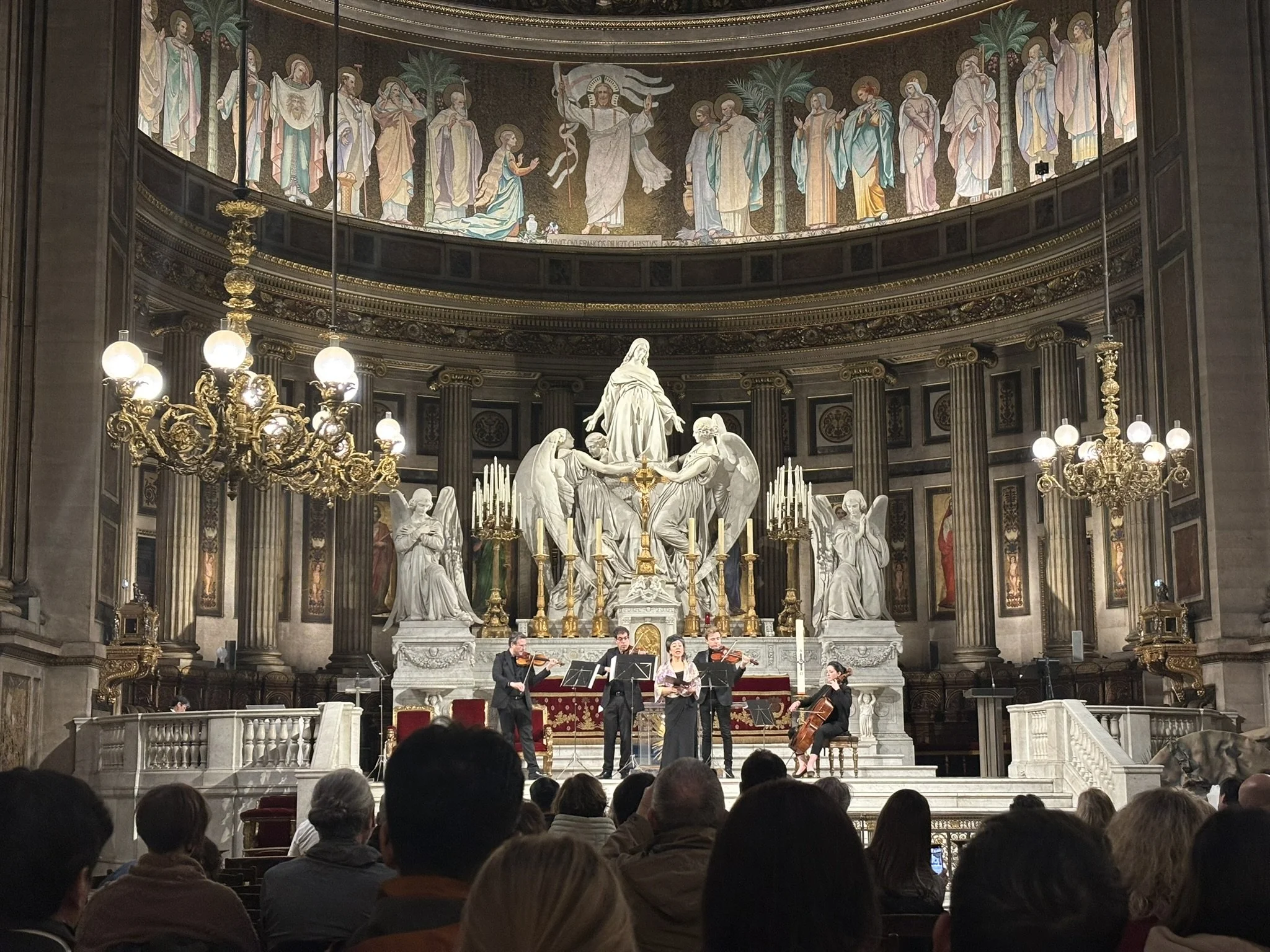
8:42pm — The Paris String Orchestra, complete with a Julia Louis-Dreyfus lookalike, breaks out “Ave Maria” about halfway through their performance at La Madeleine church. I look over, stunned, as a statue of Mary Magdalene herself springs to life and applauds rapturously.
We wandered around Montmartre for a good while following our stop at the basilica, perusing the wares at various little shops and observing street artists at work in the public square, some of whom were easel over heels into the caricatures they were crafting or the landscapes they were laying. Popping in at a gluten-free bakery — a spot literally called La Manufacture du Sans Gluten, which is extremely easy to miss along rue des Trois Frères — was on the list as well, and you know we scooped up some macaroons while we were there.
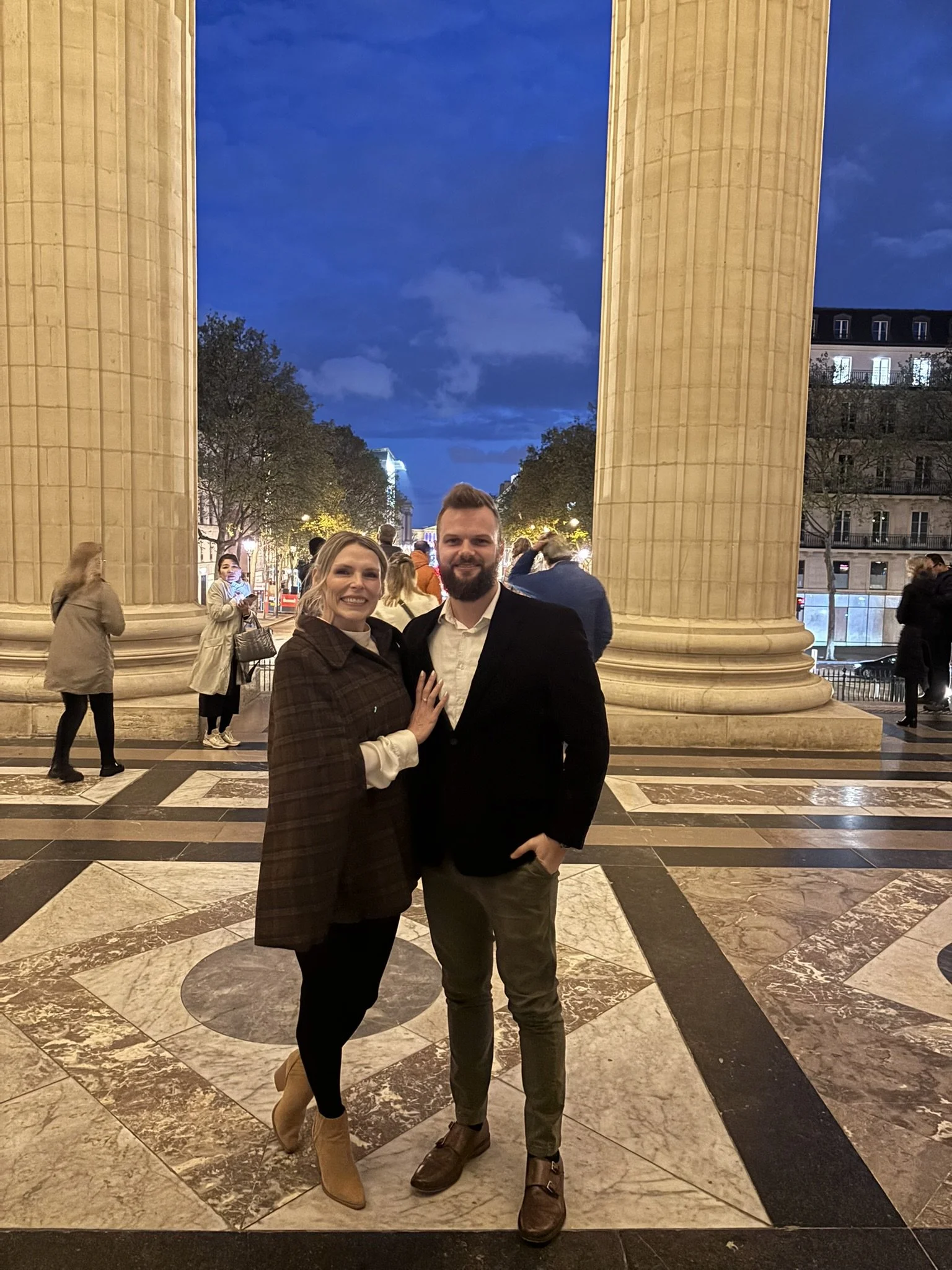
The evening could have gone in multiple directions, but we ultimately snagged a couple tickets to see the Paris String Orchestra at La Madeleine, the Roman-style church just down the street from our digs at Hôtel Chavanel. The group did a mix of instrumentals and vocal-accompanied tunes, with the setting inside the church, which honors Mary Magdalene, providing an incredible backdrop. We made sure to come correct, as well, dressing ourselves to the nines for the performance. Given that we’d spent much of the afternoon in Paris’ own little Bohemia, ending the day with another art form — classical music — seemed only appropriate.
-LTH