
Spend a Night at This Historic, Supposedly-Haunted Chicago Hotel — If You Dare!
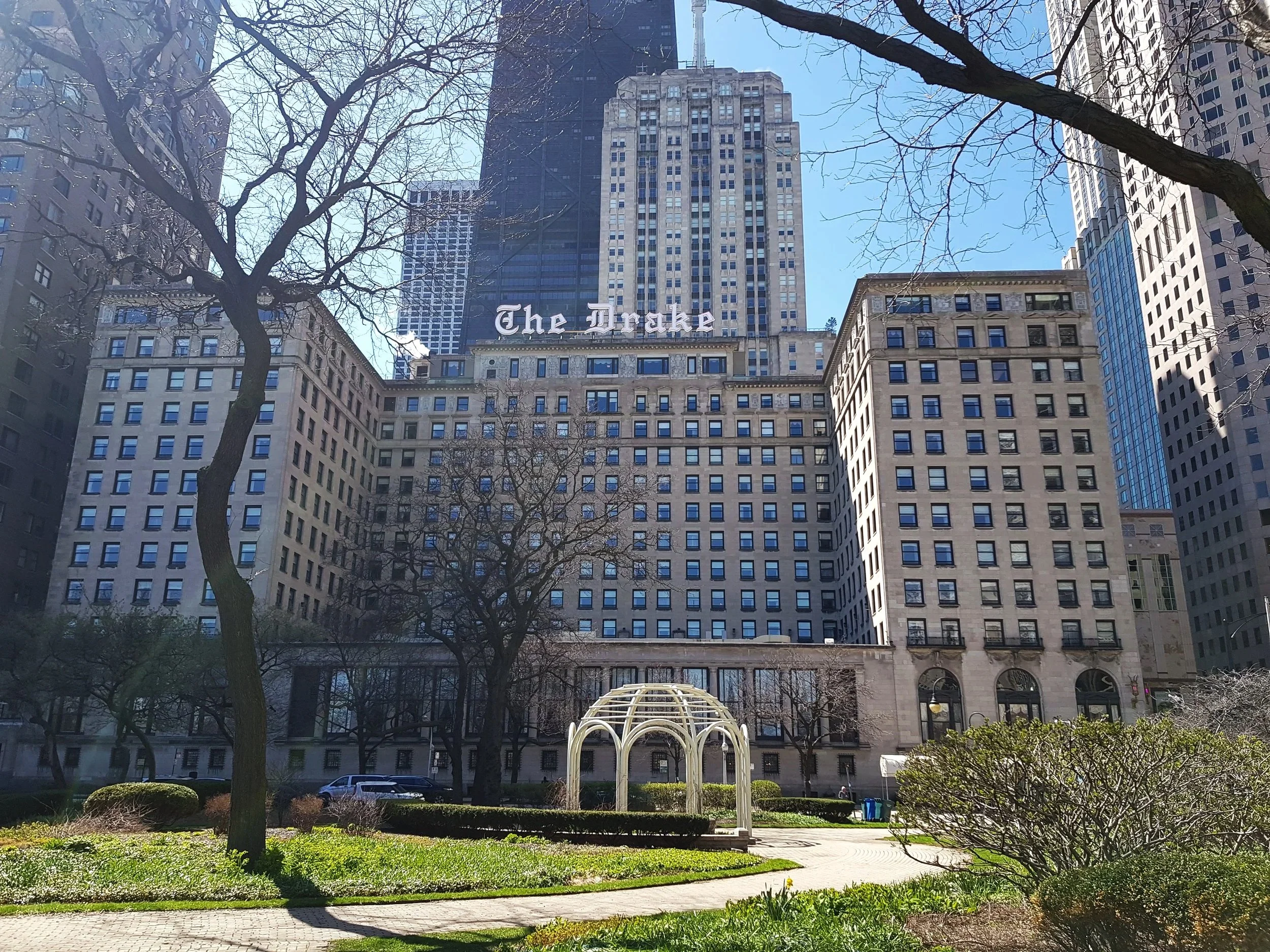
The Drake Hotel first opened its doors in downtown Chicago on New Year’s Eve in 1920 (Photo: Wikimedia Commons)
Haunted locales, whether they be hotels, theaters, ships, restaurants, cemeteries, or abandoned mental hospitals, are so plentiful that it can be difficult to make a case for one place over another. Their existence is so commonplace, in fact, we might even have to amend the phrase to “a nickel a dozen”, purely due to the laws of supply and demand. What’s more, some of these supposedly spirit-riddled hotspots are about as authentic as a three-dollar bill. But how do you determine what’s the real deal? Call in a medium? Hold an on-site séance? Make a deal with the devil?!
I hate to break it to you, but even if you believe with all your heart and soul that ghosts exist and the spirit world is all around us, finding concrete evidence of this is something that’s almost never going to happen — unless your name is Ed or Lorraine Warren maybe. But you know what I have to say? So what! Three-quarters of the fun is checking out an allegedly haunted place and scaring the bejeezus out of yourself (and/or others) along the way, regardless of what you do or do not find to prove your theory of the case. The remaining quarter of the fun, in my estimation anyway, is simply getting the chance to check out a new place, whether it turns out to be “haunted” or not.
And that brings us to today’s topic of discussion, which is the historic and allegedly haunted Drake Hotel in downtown Chicago. There are a few ghost stories associated with the century-old property, the first of which dates all the way back to the hotel’s opening night. But hold up, wait a minute (put a little love in it), because we should lay out a little of the Drake’s history before we jump right into scaring your britches off, don’t you think?
It all began back in 1916, when brothers Tracy Drake and John Drake Jr. acquired the property from the estate of a man named Potter Palmer, who was essentially one of the architects of modern-day Chicago (his most notable mark being the development of the State Street area in the late 1800s). By 1919, women finally had the right to vote (or nearly so) and the Drake brothers had the money they needed to finance their hotel.
It was less than two years later, on December 31, 1920, that the doors of The Drake opened for a grand New Year’s Eve celebration. A couple thousand prominent Chicagoans were extended an invite to the historic event, including a woman now known as the Lady in Red who apparently never left the building — not alive, anyway (*insert shocked-face emoji).
As the story goes, this poor, unfortunate, red-dress-wearing soul was enjoying the festivities with her newly-minted fiancé on that opening evening at the hotel when, at some point, her man-friend slithered away into the abyss. Unable to find him anywhere at the party, she made her way back up to their hotel room on the tenth floor, where, lo and behold, tale as old as time, he was in bed with another woman practicing some calisthenics. Her heart shattered, the Lady in Red did the only reasonable thing imaginable upon the discovery of this treachery: she flung herself out the window (or perhaps from the roof; accounts vary) to her death.

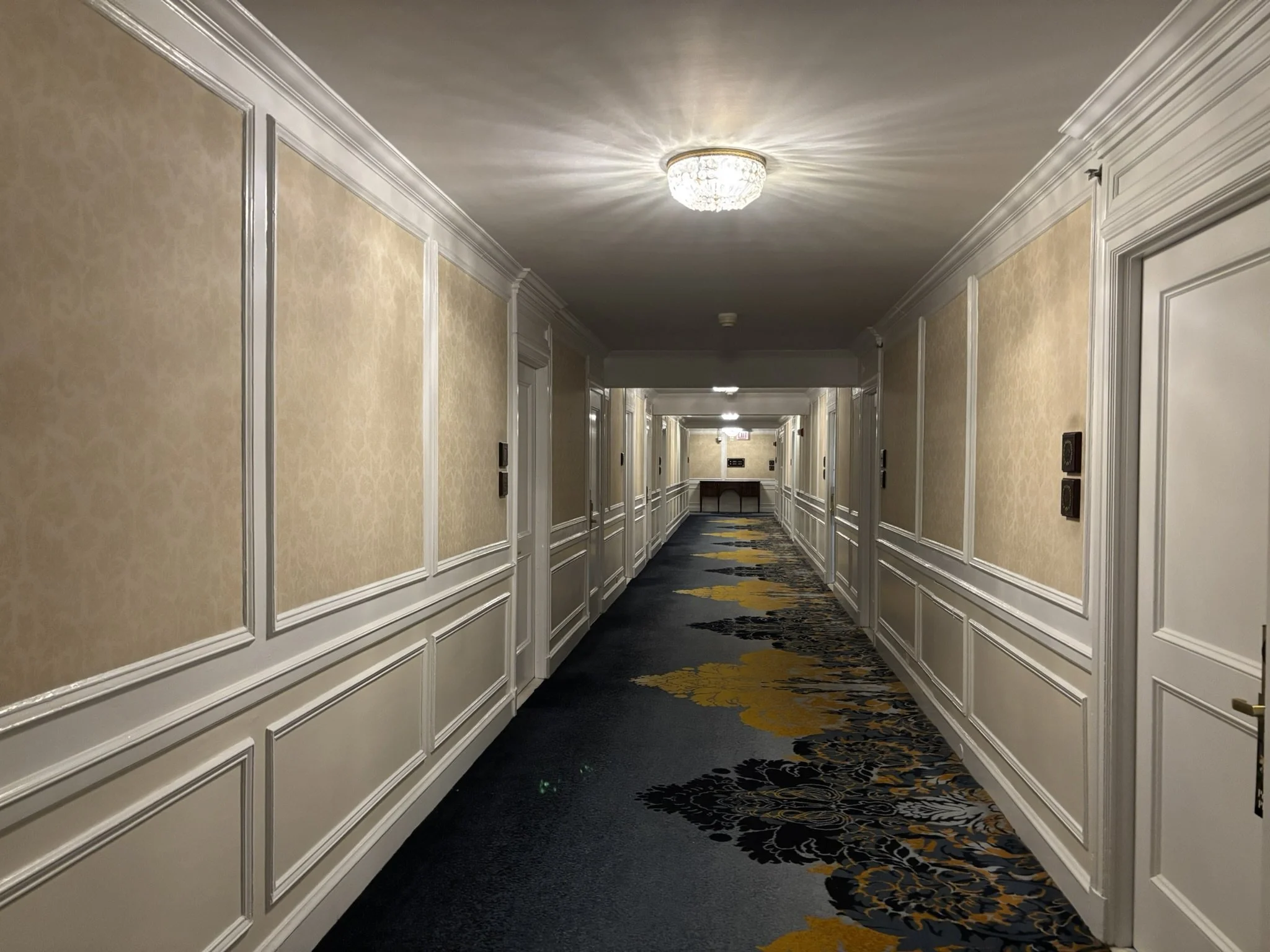

In the century since that fateful night, a number of guests have reported sightings of this grief-stricken ghost — and not only on the tenth floor, but in various other areas of the hotel, as well, including near the Gold Coast Room, where that New Year’s Eve party was a’roaring all those years ago, and in the Palm Court, where afternoon tea is still taken today. But are people just fooling themselves into believing they saw or heard something verifying the Lady in Red’s existence?
There is no official record of a suicide taking place at The Drake Hotel on the night of December 31, 1920, but, as Chicago tour guide and historian Adam Selzer of Mysterious Chicago points out, the Drake brothers were attempting to present the hotel as one of the finest in the world, and a woman flinging herself from the rooftop wouldn’t exactly have been good press. Thus, it’s possible they went to some lengths to prevent the death from being reported. Either that, or it didn’t happen at all (but what fun would that be?).
One other prominent ghost story concerning The Drake is that of the so-called Woman in Black (no, not that one). Rather than haunting the fictional Eel Marsh House in Edwardian England, this Woman in Black is said to roam the halls on the eighth floor of the historic Chicago hotel, perhaps unable to leave the scene of the crime she allegedly committed back in 1944.
It was on January 19th of that year that prominent Chicago socialite Adele Born Williams and her adult daughter, Patricia Goodbody, returned to their suite on the eighth floor to find the door unlocked. Upon entry, the pair are said to have been confronted by a grey-haired woman in a black lamb fur coat who emerged from the bathroom brandishing an antique pistol. Shots were fired and Mrs. Williams, the mother, was struck in the head. She would succumb to the injury the next day. The mysterious Woman in Black, meanwhile, allegedly fled the room, seen only by a couple of men before vanishing, never to be seen again (well, not in the flesh anyway).
The crime was never solved — a concrete motive was never even established — but the newspapers sure had a field day with this one. The only potential suspects to emerge were a hotel clerk, a woman reporters identified as Ellen Bennett (who certainly has a checkered past, to be sure), and the victim’s daughter, Patricia Goodbody, whom one police lieutenant was convinced had shot her own mother, accusing her of making up the whole story about a woman hiding in the bathroom. Authorities ultimately determined there likely was a third person in the suite when Adele Williams was shot, which, for all intents and purposes, ruled out her daughter as a suspect. Ellen Bennett, meantime, could apparently never be linked to the crime in a way that stuck.
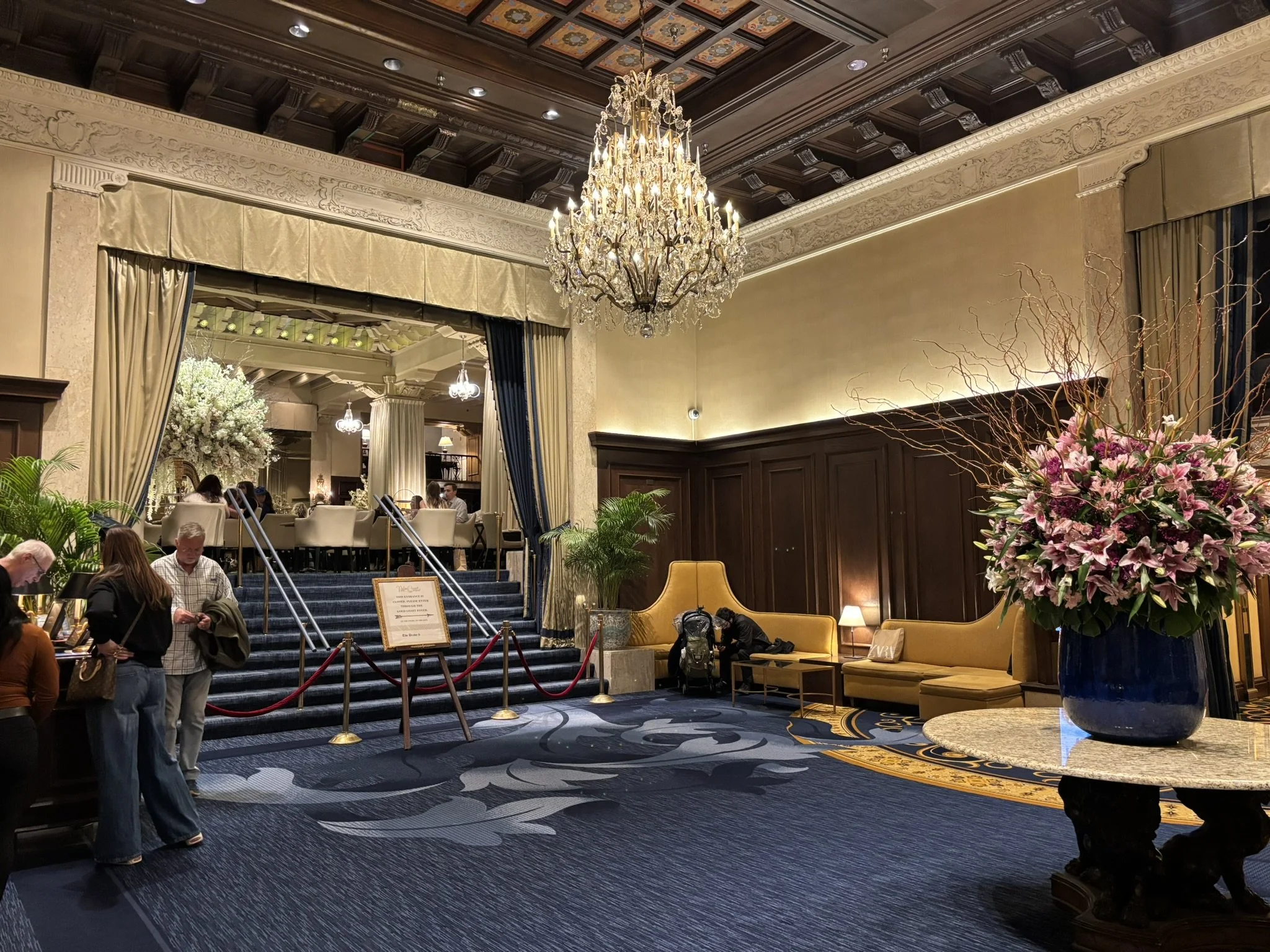
Partial view of the lobby of The Drake Hotel in downtown Chicago
Now, I know what you’re thinking: where does the ghost come in? Well, if you would just hold your horses for a second, we can get to that. I regret to inform you, however, that if you take the tale of the Lady in Red with a grain of salt, you’re likely going to have a pretty tough time getting behind this one. The Woman in Black, so the legends say, is the ghost of the never-identified perpetrator of Adele Wiliams’ murder on that cold night back in January 1944. The only problem with this contention, of course, is that whoever carried out the crime didn’t die in the hotel (as far as we know); rather, they booked it and were never seen or heard from again.
So what gives? One theory is that the very real murder case involving a suspect described as a woman wearing a black fur coat became intertwined with a madeup ghost story somewhere along the way. Consider the factors: swanky (and possibly already-haunted?) hotel, a high-profile murder victim, and an infinitely-alluring suspect known only as the Woman in Black. Sprinkle a few years of distance on top of it all, and, perhaps somewhere down the line, the possibly-haunted hotel becomes the definitely-haunted hotel; the high-profile murder victim becomes some rich woman whose name the world forgot; and the elusive criminal becomes the spooky specter that never left the eighth floor of the hotel. Seems plausible enough, no?
People love to let their imaginations run wild (yours truly included!), so it wouldn’t be surprising if one or both of these tales surrounding the spirits supposedly still roaming the halls of The Drake after all these years are entirely fabricated. But would it be so crazy if they were true?
-LTH