
Who's Up for the Penis Museum? The Strangest/Coolest/Most Memorable Museums I've Ever Visited

Taking a “dip” at the Museum of Ice Cream in Chicago (they’re sprinkles, relax!)
Let’s face facts: museums can be boring. Of the tens of thousands of museums the world over, they’re not all gonna be winners, okay? Somebody has to come in last; that’s just the reality. But we’re not here to talk about boring museums. No, no, no. We are here to talk about some of the most interesting museums I’ve stumbled upon in my travels over the years, the ones that burrowed their way into my brain and remained there long after I’d visited — and that I’d happily pay a return trip to.
There are a number of places I could have included on a list like this, mind you, which means I really had to distill it all down to some real-deal standouts. To spice it up even more, I am giving all the love to what you might consider “non-traditional” museums — those that cannot be neatly labeled as run-of-the-mill shrines to art or history or architecture (although there are countless incredible museums the world over that do fit neatly within those categories). These museums are either hyper-focused on a particular subject or rooted entirely in a particular person or place. What they all have in common, though, is their ability to turn heads.
Let’s dispense with the chit-chat and get to it, shall we? Here are five of the strangest/coolest/most memorable museums I’ve ever visited:
Museum of Ice Cream (Chicago)
We begin in a confectionary land found along the Magnificent Mile in Chicago: the Museum of Ice Cream. More candy-coated acid trip than actual museum, visiting this physical love letter to one of our favorite sweet treats is kind of like walking into a real-life Candy Land. Instead of Lord Licorice, Gramma Nutt, and that big blob of gooey chocolate, however, what you’ll find here is a pink-tinted, self-guided experience beginning with an initial “ride” on the so-called “Sprink-L Train” (#JustChicagoThings), where visitors can get their first of many ice cream samples.
From there, you’ll encounter a number of colorful spaces, beginning with the speakeasy which serves up small bites (tater tots, fries, wings), coffee, milkshakes, a variety of adult beverages, and, of course, more ice cream! Don’t fill up too much, though, because there is more to see (and eat) as you make your way through the museum, which also features a miniature putt-putt course, a carnival play area, a gift shop, and the famous sprinkle pool.
(Note: The Museum of Ice Cream also has locations in Boston, Los Angeles, Las Vegas, Miami, New York City, and Singapore.)
The Neon Museum (Las Vegas)
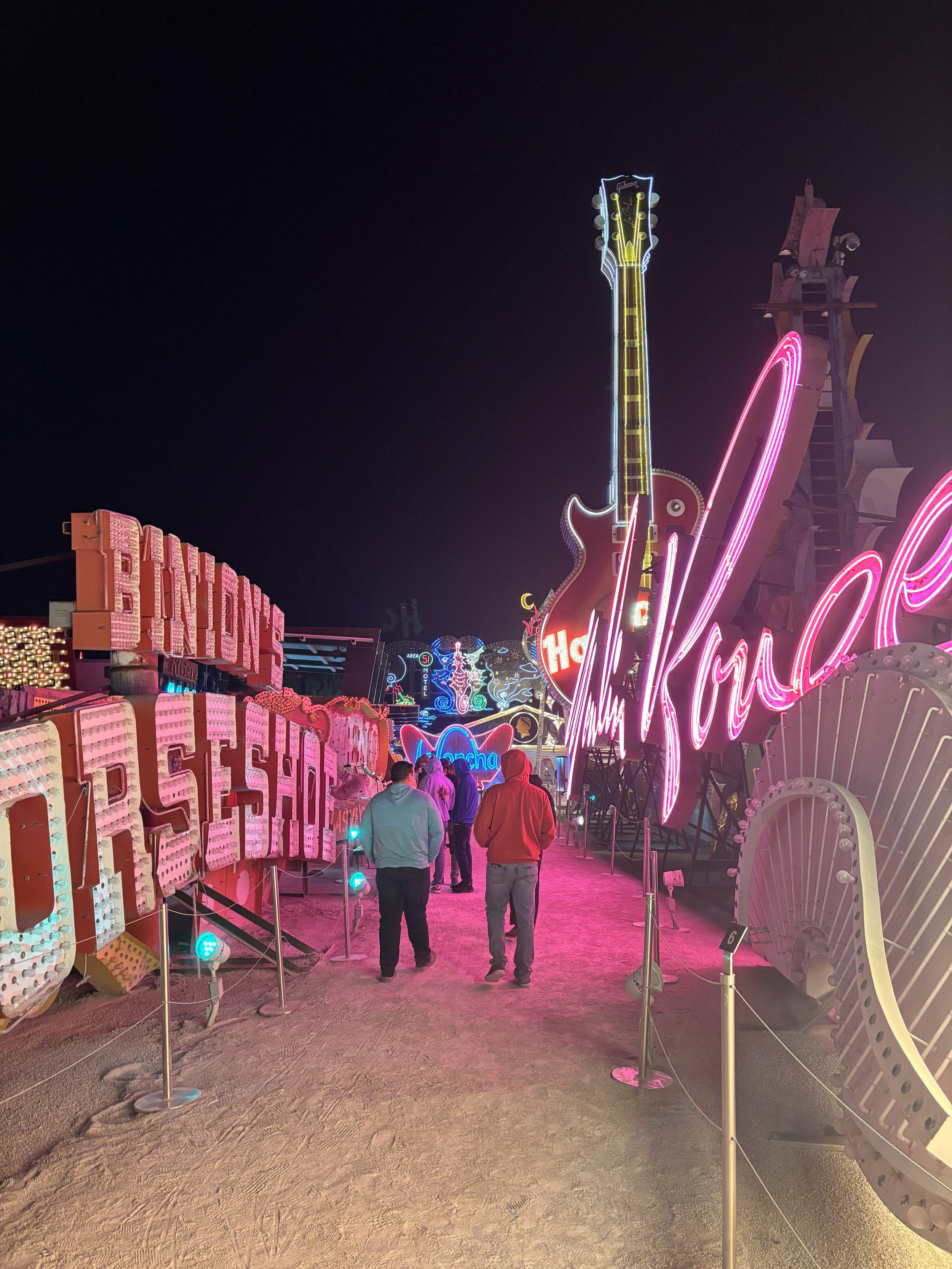
If you’ve ever wondered what becomes of those giant neon signs on the Las Vegas Strip once their day in the sun is over, wonder no longer. Many of them have found a new home at The Neon Museum near Fremont Street in downtown Vegas. Perhaps better known as the Neon Boneyard, this outdoor space tells the history of Sin City through more than 200 retired signs, the oldest of which dates back to the 1930s. Many of the signs come from casinos and businesses that no longer exist, but some, such as this old sign from the Plaza Hotel & Casino, are artifacts whose original homes still stand.
The Neon Museum is currently located in a somewhat dodgy part of town — so much so that as we walked the short half-mile or so from Fremont Street proper to the museum campus, if you will, people driving by asked us if we were lost — but is slated to reopen in a new spot come 2027. If you visit before then, it’s probably best to drive or ride share.
Further Reading: Step Into Bright Lights & Shady History at Las Vegas' Neon Boneyard
Ernest Hemingway Home & Museum (Key West, FL)
The Key West home-turned-museum of famed 20th century American wordsmith Ernest Hemingway falls more under the coolest/most memorable category, as opposed to some of the oddities included on this list, but no matter! Even if you’re not a fan of his, the Ernest Hemingway Home & Museum is a piece of Americana worth seeing. Ernest took up residence in this French Colonial style house in 1931, ultimately living there for eight years. During that time, he worked on a number of novels that would become real bangers in his oeuvre, including Green Hills of Africa (1935), To Have and Have Not (1937), and For Whom the Bell Tolls (1940).
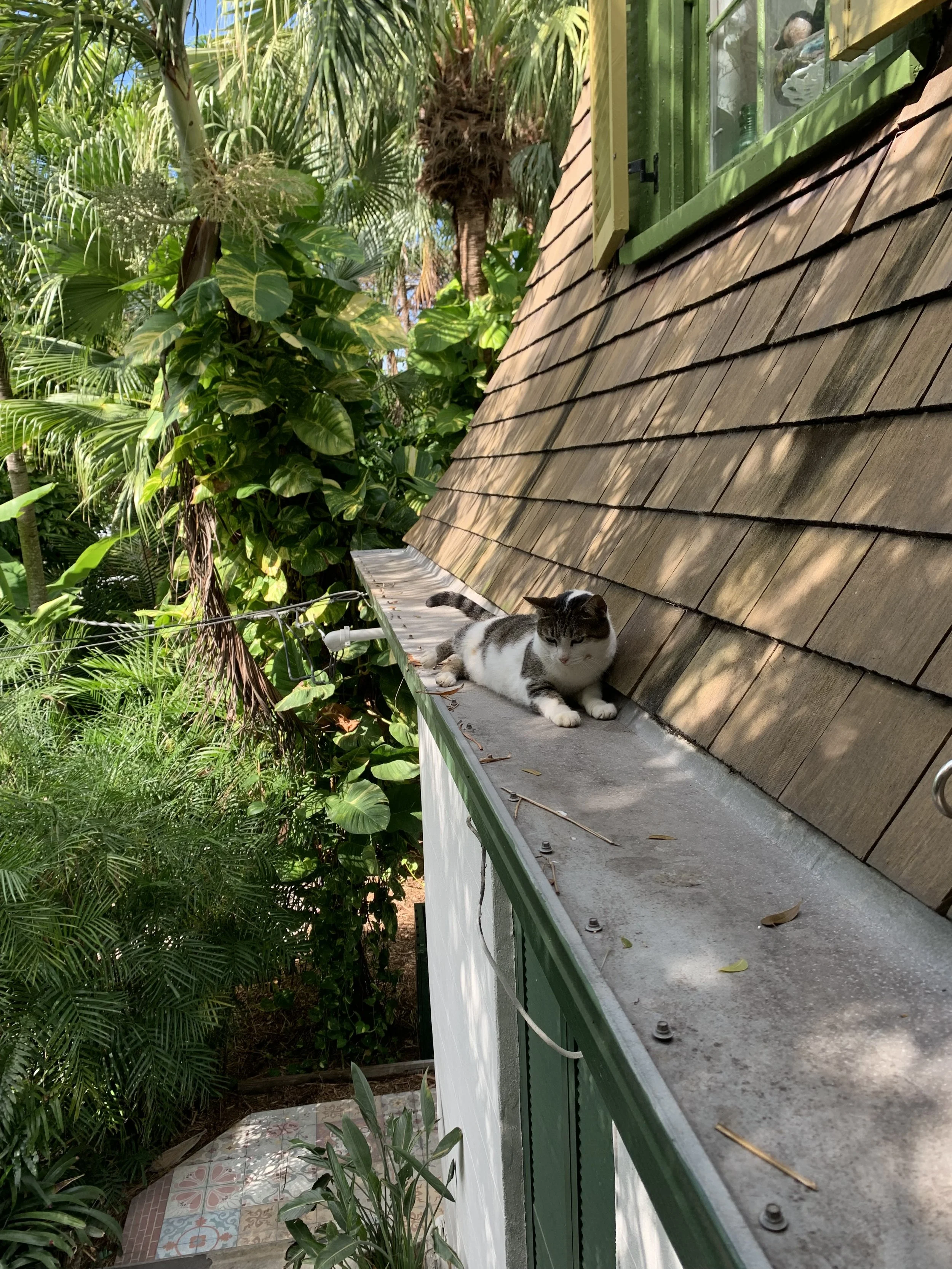
One of the most interesting things about this museum, however, is the fact that it is home to a clowder of polydactyl, or six-toed, cats, some of which are descendants of the cats Hemingway himself had as pets while living on Key West. These feisty felines, which roam the grounds freely, are taken care of by an on-site veterinarian and will happily (or maybe shyly) greet you when you pay a visit.
Michigan Central Station (Detroit)
Detroit is one of those cities with innumerable hidden gems, but, even if you’ve never heard of it, that particular moniker is not necessarily a fitting way to refer to Michigan Central Station. For starters, you literally cannot miss the building, as it stands all by its lonesome, thirteen stories high, in the middle of Detroit’s Corktown neighborhood. For seconds, it opened — or, rather, reopened after being shuttered for decades — with great fanfare in the summer of 2024, with performances from the likes of Diana Ross, Jack White, Big Sean, the Detroit Symphony Orchestra, and none other than Slim Shady himself, Eminem.
You may be saying to yourself right now, “Wait, are we talking about a train station? I thought this was a post about museums?” Well, guess what: you’re right on both fronts. Michigan Central was, historically, a train depot connecting Detroit to destinations in Illinois, Indiana, New York, and Ontario via the Michigan Central Railroad. The new and improved version is a vibrant museum honoring all of that history and its place in the larger story of the city. And it is one of the coolest, in my humble opinion, because it is a place that almost wasn’t.
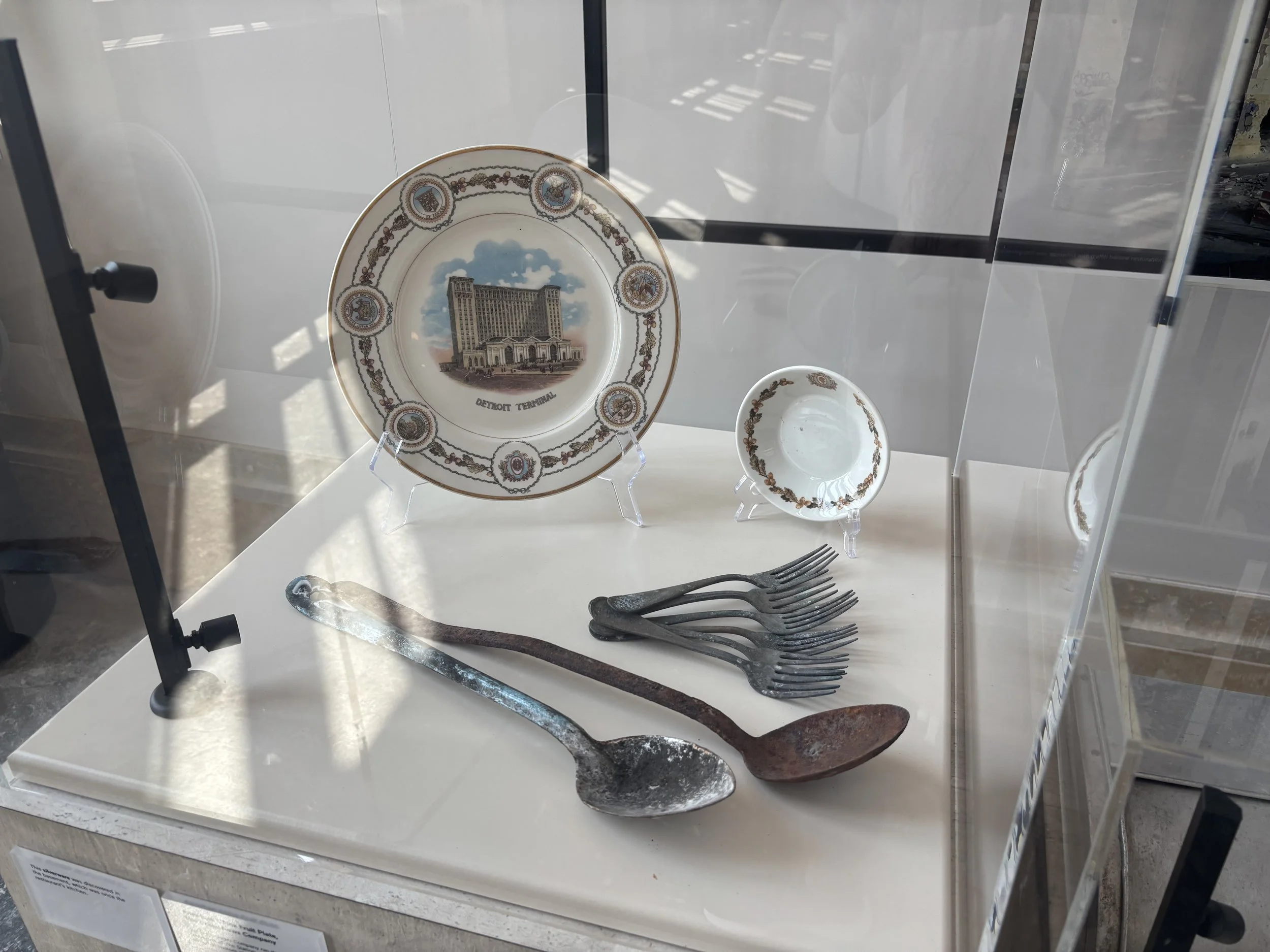
They literally saved Michigan Central, which had fallen into a state of total disrepair after closing in the 1980s, at the eleventh hour, right before it crossed the point of no return, when the damage would have been so great as to make it unsalvageable. The entire story of that process, along with plenty of artifacts from the last 100+ years, are now available for all the world to see.
Further Reading: The Revived Ruin That Perfectly Showcases Detroit's Ongoing Renaissance
The Icelandic Phallological Museum (Reykjavík)
All right, here we are. The moment you’ve all been waiting for. The titular (isn’t that a funny word, given the context?) museum! But it is also the moment of truth, for I must come clean and admit that I never actually visited the Icelandic Phallological Museum while on a trip to Iceland toward the end of 2018. We walked by it, but that’s the best I got. Nevertheless, it is exactly what you think it is — which is to say: a museum dedicated to phalluses, AKA dicks.
It all got started back in 1974 when the museum’s eventual founder, Sigurður Hjartarson, who at the time was headmaster of a school in a small town north of Reykjavík, was gifted a bull penis by his teaching staff. It became a running joke for the staff to gift him various animal penises, a project that was helped along by virtue of some of the teaching staff having summer jobs at a whaling station. Fast forward to today and the Phallological Museum, which Hjartarson founded in 1997, is one-of-one in its dedication to the study of phallology. The museum is home to over 300 penises from over 100 species of mammal and even features 22 “imagined penises of creatures from Icelandic folklore”, for our fantasy-minded friends.
Oh, and you already know there’s a gift shop filled with dick-themed merch.
-LTH